
 Send Inquiry


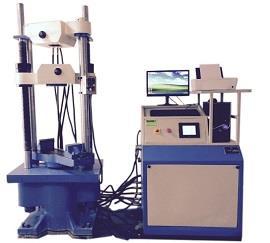
Universal Testing Machine
250000.00 - 500000.00 INR/Piece
Product Details:
- Stroke Length Up to 800 mm
- Product Type Electronic Universal Testing Machine
- Speed Range 0.5 to 500 mm/min
- Resolution 0.01 mm
- Power Source Electric
- Color Blue & White
- Phase Three Phase
- Click to view more
X
Universal Testing Machine Price And Quantity
- Up to 600 kN
- Digitally displayed, programmable
- 250000.00 - 500000.00 INR/Piece
- 1 , , Piece
Universal Testing Machine Product Specifications
- Microprocessor-based panel, Display of Load/Displacement/Elongation, Motorized operation, Data output to PC
- Automatic
- Digital, Touch Panel/PC based
- 40 mm (lead screw)
- Mild Steel Structure
- High Precision Load Cell
- Blue & White
- Tensile, Compression, Flexural, Shear testing for metals and non-metals
- Three Phase
- Electric
- 0.5 to 500 mm/min
- 0.01 mm
- Up to 800 mm
- Electronic Universal Testing Machine
- RS232/USB to PC
- Digital LCD/LED
- Custom fixtures for round, flat, or irregular samples
- Complies with IS, ASTM, DIN, ISO
- 300 mm to 800 mm (depending on model)
- Data acquisition and analysis software included
- Overload and Overtravel protection
- Up to 1000 mm
- Interchangeable grips for different test specimens
Universal Testing Machine Trade Information
- 100 , , Piece Per Week
- Days
- All India
Product Description
Technical Specifications :-
UTMs to be supplied with modern design and features along with more stability and aesthetics,
The equipment must have the following features:
- Loading accuracy as high as -/+ 1% of the indicating value
- Strain measurement at variable speed to cover a wide range of materials adjustable by the manual control valve.
- High reading accuracy and rugged design of digital display.
- Simple control to facilitate ease of operation.
- Fully enclosed and protected load measuring system.
- Robust load frame with extremely rigid construction.
- Large effective clearance between columns enables testing of standard specimen as well as structures.
- Motor driven threaded columns for UP/DOWN movement of lower crosshead for quick change over of specimen, grips and attachment.
The equipment must be a computerized Universal Testing Machine which has a micro processor based electronic panel, Precision strain gauge type pressure transducer for load measurement, Rotary encoder with rack for crosshead displacement/Extension indication,
RS 232 COM port for PC interface, Data entry for specimen dimension, serial number, gauge length. Unit selection for load, displacement. Results include Load vs
Displacement Curve, Maximum displacement, UTS, % Elongation, Youngs Modulus & Proof Stress
Accuracy And Calibration
Universal Testing Machines should be controlled for precision, accuracy and reliable calibration during every stage of manufacturing. The machines must be calibrated in accordance with BS:1610( grade A of BS 1610 : 1964 ) and IS standardsgrade 1 of IS : 1828 - 1991.
The UTM must comply with the following technical specifications
|
Description Universal Testing Machine |
Description Universal Testing Machine |
|
Machine Capacity 1000 kN |
Machine Capacity 1000 kN |
|
Max Clearance for tensile test 50 to 850 mm or more |
Max Clearance for tensile test 50 850 mm or more |
|
Max Clearance for compression test 0 to 850 mm or more |
Max Clearance for compression test 0 850 mm or more |
|
Clearance between columns 750 mm |
Clearance between columns 750 mm |
|
Ram Stroke 250 mm |
Ram Stroke 250 mm |
|
Straining/piston speed at no load 0 to 80 mm |
Straining/piston speed at no load 0 80 mm |
|
For Tension Test Clamping Jaws for round specimen Clamping Jaws for flat specimen |
8 to 40 mm 0 to 65 mm |
|
For Compression Test : Pair of compression plates |
220 mm |
|
For Transverse Test: Table with adjustable rollers Max clearance between supports Radius of punch tops |
800 mm 16mm, 22mm |
The equipment must be supported by software with features for the following tests :
- Tensile Testing
- Compression Testing
- Bending Test
- Shear Test
- Torsion Test
- Rubber/Textile Test
- Spring Test
- Extensometer Test
Advanced Digital Control and Display
Equipped with a microprocessor-based panel and digital LCD/LED display, the machine provides real-time visualization of load, displacement, and elongation. A touch panel/PC interface enhances test management and data collection, complemented by dedicated software for efficient data acquisition and analysis.
Versatile Testing Capabilities
Designed for tensile, compression, flexural, and shear testing, the machine supports a broad spectrum of specimen types with its interchangeable grip arrangement and custom fixture support. This flexibility ensures reliable results for round, flat, or irregular samples, catering to a variety of industry and research requirements.
Robust Safety and Compliance Features
Overload and overtravel protection systems safeguard both operators and equipment. The machine strictly adheres to international testing standards (IS, ASTM, DIN, ISO), ensuring valid and reproducible results for quality assurance and certification needs. Its high precision load cell maintains accuracy throughout testing processes.
FAQs of Universal Testing Machine:
Q: How does the Universal Testing Machine ensure accurate test results?
A: The Universal Testing Machine utilizes a high precision load cell and advanced microprocessor control to deliver test results with an accuracy of 1% of the indicated load. The digital display and data analysis software further help validate and record accurate results for a variety of test types.
Q: What specimen types can be tested using this machine?
A: Thanks to interchangeable grips and custom fixture support, the machine can test round, flat, or irregular samples. It performs tensile, compression, flexural, and shear testing on both metals and non-metals, accommodating a wide range of industry materials.
Q: Where can this Universal Testing Machine be installed and used?
A: This machine is suitable for installation in laboratories, manufacturing plants, R&D facilities, and educational institutions across India. Its robust design and compliance with international standards make it ideal for quality control and material testing environments.
Q: What is the process of exporting test data to a computer for analysis?
A: Test data is exported through the RS232 or USB interface to a connected PC. The included software allows for straightforward data acquisition, analysis, and report generation to streamline documentation and further study.
Q: When should overload and overtravel protection features be used?
A: These protective functions are automatically engaged during test operations that exceed preset parameters, safeguarding both the operator and equipment from accidental damage or erroneous results. They are integral during all testing procedures.
Q: How does the variable speed function benefit different testing requirements?
A: The variable speed feature, ranging from 0.5 to 500 mm/min, allows users to customize test conditions according to specific material characteristics and test standards. This flexibility ensures optimal testing for different sample types and processes.
Tell us about your requirement

Price:
Quantity
Select Unit
- 50
- 100
- 200
- 250
- 500
- 1000+
Additional detail
Mobile number
Email

Other Products in 'Strength Of Materials Lab Equipment' category

Contact Details

- B No. 51, Rama Road Industrial Area, New Delhi - 110015, India
ACCURATE SCIENTIFIC INTERNATIONAL
GST : 07ADUPA7135P1ZY
GST : 07ADUPA7135P1ZY

- Mr Parth Anand (Business Development Manager)
- Mobile : +919810080693, +919599580698
- accuratescientific51@gmail.com
- Branch Address : 1805 E Gwen Street, Phoenix, Arizona 85042
 Send Inquiry
 Send SMS
ACCURATE SCIENTIFIC INTERNATIONAL
All Rights Reserved.(Terms of Use)
Developed and Managed by Infocom Network Private Limited.
Developed and Managed by Infocom Network Private Limited.

