
 Send Inquiry


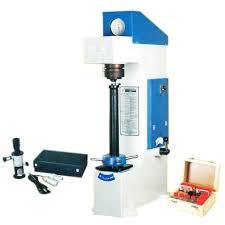
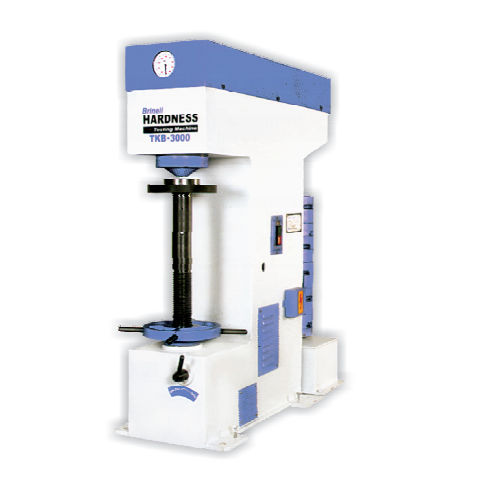
Rockwell Cum Brinell Hardness Tester
50000.00 - 100000.00 INR/Piece
Product Details:
- Specimen Size Flat: up to 150 mm height, Round: 10-60 mm diameter
- Power Supply AC 220V, 50Hz
- Hardness Rockwell B, Rockwell C, Brinell scales
- Test Range 20-100 HRB, 20-70 HRC, 100-500 HBW
- Features Combined Rockwell and Brinell hardness testing, robust cast iron body, precision loading mechanism
- Application Hardness testing of metals and alloys
- Measuring Range 20100 HRB, 2070 HRC, 100500 HBW
- Click to view more
X
Rockwell Cum Brinell Hardness Tester Price And Quantity
- 50000.00 - 100000.00 INR/Piece
- 1 Piece
Rockwell Cum Brinell Hardness Tester Product Specifications
- 10C to 40C
- Analog dial indicator
- Metallurgical laboratory, quality control
- Initial load 10 kgf; main load 60, 100, 150 kgf
- 0.5 Rockwell units
- Single test (each cycle)
- Tabletop
- Standard (Manual control)
- Manual
- 155 mm
- 50 Hz
- Rockwell Cum Brinell Hardness Tester
- Immediate (manual reading)
- 220V
- <80% RH (non-condensing)
- Flat: up to 150 mm height, Round: 10-60 mm diameter
- AC 220V, 50Hz
- 20-100 HRB, 20-70 HRC, 100-500 HBW
- Rockwell B, Rockwell C, Brinell scales
- Combined Rockwell and Brinell hardness testing, robust cast iron body, precision loading mechanism
- 155 mm (Max. vertical test height)
- Manual
- Hardness testing of metals and alloys
- 20100 HRB, 2070 HRC, 100500 HBW
- Conforms to IS 2281, BS 240, ASTM E-10, E-18
- 150 mm (Throat depth)
- Approx. 95 kg
- Diamond cone (120), 1/16" ball indenter (steel and tungsten carbide options)
- 530 mm x 205 mm x 700 mm
- IS: 2281, IS: 1586, BS: 240, ASTM E-10, ASTM E-18
- 1 year
- Over load protection
- Baked enamel coating for corrosion resistance
- Heavy duty cast iron
- Single person
- Wooden case
- Brinell and Rockwell test blocks, flat and V anvils, Allen keys, conversion table, dust cover
- Lever operated loading/unloading
Rockwell Cum Brinell Hardness Tester Trade Information
- 100 Piece Per Week
- 5-7 Days
- All India
Product Description
Rockwell Cum Brinell Hardness Tester
- This is a combined hardness testing machine used to measure hardness of metals & alloys of all kinds, hard or soft,whether round, flat or irregular in shapes.
- This machine is ideally suitable for laboratories, tool rooms, Heat treatment shops, R&D departments, inspection departments,casting & forging industries, educational institutions.
- Rockwell & Brinell method is used for checking hardness on metals& alloys of all kinds.
- Brinell hardness is also checked on non-ferrous materials like Cast iron,Alluminium, etc.
- Automatic weight selection with automatic zero setting dial gauge.
- Rockwell test minor load is 10 kgf & major loads are 60,100,150 kgf. Brinell test for Model : MRB major load is 187.5 & for Model :MRB-250 are 187.5, 250 kgf.
- Rockwell hardness scales such as HRA, HRB, HRC, etc. Brinell hardness scale such as HB is obtained by using different types of indentors( Diamond / Ball ).
- For Model : ASI-RHTB, Test height x Throat is-215 x 132 mm. For Model : ASI-RHTB2,Test height x Throat is-295 x 148 mm.
- Motorized versions are also available.
- Machines strictly conforms to IS:1586- 2000 for Rockwell test, IS:2281,BS:240, ASTM-E-10 for Brinell test.
Technical Specification
| MODELS | ASI-RHTB | ASI-RHTB2 |
| Test Loads (Kgf) | 60, 100, 150 (Rockwell) | 60, 100, 150 (Rockwell) |
| Initial Loads (Kgf) | 10 | 10 |
| Max. Test Height (mm) | 215 | 295 |
| Depth of Throat (mm) | 132 | 148 |
| Max. Depth of Elevating Screw Below Base (mm) | 230 | 295 |
| Size of Base (mm) (Approx.) | 430 x 180 | 475 x 220 |
| Machine Height (mm) | 635 | 865 |
| Nett Weigth (kg.) (Approx.) | 70 | 125 |
Standard Accessories :
| MODELS | ASI-RHTB | ASI-RHTB2 |
| Rockwell Diamond Indentor | 1 No. | 1 No. |
| Testing Table f 50 mm | 1 No. | 1 No. |
| Testing Table f40 mm with V Groove for round Jobs f 6 to 45 mm | 1 No. | 1 No. |
| Steel Ball Indentor f1/16 | 1 No. | 1 No. |
| Steel Ball Indentor f2.5 mm | 1 No. | 1 No. |
| Steel Ball Indentor f5 mm | -- | 1 No. |
| Test Block HRC | 1 No. | 1 No. |
| Test Block HRB | 1 No. | 1 No. |
| Test Block HB 2.5mm/187.5 Kgf | 1 No. | 1 No. |
| Steel Ball f1/16 | 5 Nos. | 5 Nos. |
| Allen Spanners | 3 Nos. | 3 Nos. |
| Clamping Device | 1 No. | 1 No. |
| Brinell Microscope | 1 No. | 1 No. |
| PVC Cover for Machines | 1 No. | 1 No. |
| Rubber Bellow | 1 No. | 1 No. |
| Instruction Manual | 1 Book | 1 Book |
Versatility in Hardness Testing
This tester facilitates comprehensive metal and alloy evaluation by combining both Rockwell and Brinell testing methods. The use of multiple indenter types and adjustable load settings enables accurate analysis of varying material hardness, ensuring that both softer and harder specimens can be tested efficiently within standardized ranges.
Precision and Reliable Results
Engineered for accuracy, the device conforms to IS: 2281, IS: 1586, BS: 240, and ASTM E-10/E-18 standards. The analog dial indicator provides immediate manual readings, with a resolution of 0.5 Rockwell units. Its high-quality cast iron construction and precision loading mechanism reduce errors and support consistent, repeatable results.
Ease of Use and Safety Features
Designed for straightforward, single-operator control, it employs a manual lever-operated loading and unloading process. Overload protection safeguards both user and equipment, while ergonomic features like flat and V anvils simplify specimen placement. The included wooden case and dust cover enhance storage and durability in challenging lab settings.
FAQ's of Rockwell Cum Brinell Hardness Tester:
Q: How do I operate the Rockwell Cum Brinell Hardness Tester?
A: Operation is manual, using the lever to load and unload specimens. Position your sample securely on the appropriate anvil, select the desired indenter and load, and follow the dial indicator to obtain immediate hardness readings.Q: What types of materials can I test with this equipment?
A: You can evaluate the hardness of metals and alloys, both flat specimens up to 150 mm in height and round specimens with diameters from 10-60 mm, across Rockwell B, Rockwell C, and Brinell scales.Q: When should I choose between the diamond cone, steel ball, and tungsten carbide ball indenters?
A: The diamond cone is ideal for harder materials (Rockwell C). The 1/16" ball-steel or tungsten carbide-should be used for softer to medium-hard specimens, following ASTM and IS standards for specific scale requirements.Q: Where should this hardness tester be installed for optimal performance?
A: It is designed for tabletop mounting in controlled lab environments, such as metallurgical laboratories or quality control departments. Maintain conditions between 10C to 40C with humidity less than 80% RH.Q: What is the process for switching between Rockwell and Brinell tests?
A: Switching is manual: install the appropriate indenter and select the corresponding test block and load. The conversion table provided aids in interpreting results across scales, ensuring accurate testing for both methods.Q: How does the device ensure operator and equipment safety?
A: Safety is built in through overload protection, a sturdy cast iron body, a baked enamel finish for corrosion resistance, and secure accessories such as dust cover and wooden packaging for safe transport and storage.Q: What are the benefits of using this hardness tester in your laboratory?
A: This tester provides versatility for multiple hardness scales, accuracy certified to key standards, rapid manual results, robust construction for longevity, and an ergonomic design enabling one-person operation-all essential for efficient material quality assessment.Tell us about your requirement

Price:
Quantity
Select Unit
- 50
- 100
- 200
- 250
- 500
- 1000+
Additional detail
Mobile number
Email

Other Products in 'Hardness Testing Machine' category

Contact Details

- B No. 51, Rama Road Industrial Area, New Delhi - 110015, India
ACCURATE SCIENTIFIC INTERNATIONAL
GST : 07ADUPA7135P1ZY
GST : 07ADUPA7135P1ZY

- Mr Parth Anand (Business Development Manager)
- Mobile : +919810080693, +919599580698
- accuratescientific51@gmail.com
- Branch Address : 1805 E Gwen Street, Phoenix, Arizona 85042
 Send Inquiry
 Send SMS
ACCURATE SCIENTIFIC INTERNATIONAL
All Rights Reserved.(Terms of Use)
Developed and Managed by Infocom Network Private Limited.
Developed and Managed by Infocom Network Private Limited.

