
 Send Inquiry


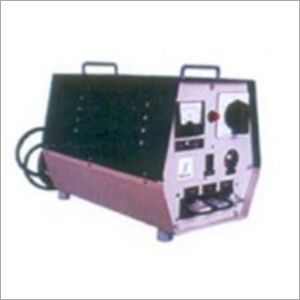
Magnetic Particle Inspection Equipment
50000.00 - 100000.00 INR/Piece
Product Details:
- Features Integrated demagnetization, user friendly, high sensitivity, durable design
- Accuracy 1%
- Test Range Up to 1000 A DC/AC
- Measuring Range 0-1000 Amps
- Response Time < 1 second
- Mounting Type Floor Mounted
- Temperature 0C to 50C
- Click to view more
X
Magnetic Particle Inspection Equipment Price And Quantity
- 50000.00 - 100000.00 INR/Piece
- 1 Piece
Magnetic Particle Inspection Equipment Product Specifications
- Up to 350 mm length
- 400 mm
- Standard
- 50 Hz
- 90% RH (non-condensing)
- Not Required (Dry & Wet methods available)
- 1000 Amps
- 1%
- Up to 1000 A DC/AC
- 0-1000 Amps
- < 1 second
- Floor Mounted
- 0C to 50C
- Panel Mounted Switches & Digital Display
- Variable (adjustable as required)
- Integrated demagnetization, user friendly, high sensitivity, durable design
- 220 V AC, 50 Hz
- Detection of surface and sub-surface cracks in ferromagnetic materials
- 600 mm
- 1 (at a time)
- Industrial NDT Testing
- Bench Type Magnetic Particle Inspection Machine
- 1 Amp
- Digital Meter
- 450 mm (maximum component clearance)
- Semi-Automatic
- 180 Kg
- Automatic/Manual
- 220 V
- Heavy Duty Steel
- Indoor use
- Overload & Overheat Protection
- 8 Litres (Bath tank stainless steel)
- Longitudinal and Circular
- Inbuilt UV & White Light
- AC, HWDC & FWDC
- 250 mm
- Powder Coated
- Natural Air Cooling
- Push Button Demagnetization Cycle
- Foot switch, test piece holders, magnetic powder set
- Microprocessor based controller
- ASTM E709, IS: 3703, BS standards
- Wet Fluorescent & Wet Visible, Dry Powder
Magnetic Particle Inspection Equipment Trade Information
- 100 Piece Per Week
- 5-7 Days
Product Description
As a specialist in this domain, we are offering Magnetic Particle Inspection Equipment, which is demanded for detecting surface and shallow subsurface discontinuities in ferromagnetic materials. Additionally, the Magnetic Particle Inspection Equipment is rigorously checked at every stage to offer a flawless range at customers end. This equipment can detect surface and subsurface flaws in ferromagnetic materials.
Advanced Magnetization Methods
The equipment provides both longitudinal and circular magnetization, allowing targeted testing based on defect orientation. Operators can adjust settings to induce magnetic fields that best reveal potential flaws, enhancing detection capabilities and flexibility for various component geometries.
Multiple Inspection Modes for High Sensitivity
Selectable inspection methods include wet fluorescent, wet visible, and dry powder, ensuring optimal sensitivity for different use cases. UV and white light sources are integrated for visual examination, supporting superior defect visibility during inspection and streamlined workflow.
Safety and Compliance Standards Assured
Built with overload and overheat protection and compliant to ASTM E709, IS 3703, and BS standards, this machine safeguards operators and meets industry regulations. The sturdy steel construction and powder-coated finish offer long-term durability for high-volume industrial environments.
FAQ's of Magnetic Particle Inspection Equipment:
Q: How does the machine perform magnetic particle inspection using longitudinal and circular magnetization?
A: This equipment offers adjustable current flow for both longitudinal (along the axis) and circular (around the circumference) magnetization. Depending on the type of defect and specimen geometry, operators select the suitable magnetization direction via the microprocessor controller for enhanced flaw detection.Q: What inspection methods are available and how do they improve flaw detection?
A: The machine supports wet fluorescent, wet visible, and dry powder methods. Wet fluorescent and visible methods use specialized particles under UV or white light to detect minute surface and sub-surface cracks, while dry powder suits specific applications where liquid might not be optimal. These options together maximize flaw identification.Q: When should integrated demagnetization be used after inspection?
A: Demagnetization is recommended immediately after testing to remove residual magnetism in the specimen. This ensures both accurate subsequent measurements and prevents magnetic retention that could affect material performance. Operators can activate demagnetization via the dedicated push button cycle on the control panel.Q: Where is this inspection equipment suitable for operation?
A: Designed for indoor use, the machine operates efficiently in industrial environments like manufacturing plants or NDT laboratories. Its robust floor-mounted build supports demanding applications with environmental tolerances up to 90% RH and temperatures from 0C to 50C.Q: What is the process for using the machine to inspect a specimen?
A: To inspect, place the specimen (up to 350 mm length) on test piece holders, select magnetization direction and inspection method, apply magnetic particles, and observe results under integrated lighting. The microprocessor controller manages current type, speed, and detection cycle, with options for automatic or manual operation.Q: How does variable test speed and adjustable stroke benefit industrial users?
A: Variable test speed and adjustable stroke (up to 400 mm) allow operators to optimize inspection for different specimen sizes and complexities. This adaptability increases throughput while maintaining testing accuracy across a range of industrial components.Q: What accessories and protections are included with the equipment for enhanced usage and safety?
A: Standard accessories include a foot switch, specimen holders, and a magnetic powder set. Overload and overheat protection, digital accuracy (1%), and fast response time further ensure operator safety, reliability, and ease of use during NDT procedures.Tell us about your requirement

Price:
Quantity
Select Unit
- 50
- 100
- 200
- 250
- 500
- 1000+
Additional detail
Mobile number
Email

Other Products in 'Mechanical Engineering Lab Testing Equipment' category

Contact Details

- B No. 51, Rama Road Industrial Area, New Delhi - 110015, India
ACCURATE SCIENTIFIC INTERNATIONAL
GST : 07ADUPA7135P1ZY
GST : 07ADUPA7135P1ZY

- Mr Parth Anand (Business Development Manager)
- Mobile : +919810080693, +919599580698
- accuratescientific51@gmail.com
- Branch Address : 1805 E Gwen Street, Phoenix, Arizona 85042
 Send Inquiry
 Send SMS
ACCURATE SCIENTIFIC INTERNATIONAL
All Rights Reserved.(Terms of Use)
Developed and Managed by Infocom Network Private Limited.
Developed and Managed by Infocom Network Private Limited.

