
 Send Inquiry


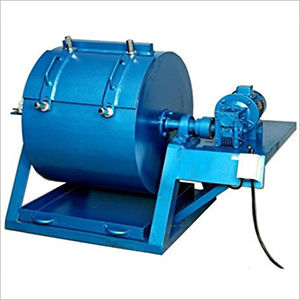
Los Angeles Abrasion Testing Machine
50000.00 - 100000.00 INR/Piece
Product Details:
- Interface Type Panel mounted controls
- Equipment Type Abrasion Testing Machine
- Resolution 0.1 g
- Humidity Operating range 45% - 85% RH
- Port Size Standard 50 mm discharge chute
- Automation Grade Semi-automatic
- Number of Specimens 1 per test cycle
- Click to view more
X
Los Angeles Abrasion Testing Machine Price And Quantity
- 1 Piece
- 50000.00 - 100000.00 INR/Piece
Los Angeles Abrasion Testing Machine Product Specifications
- Digital revolution counter display
- Approximately 200 kg
- Cast iron drum, digital counter, preset revolution timer, drive mechanism with reduction gear
- ±1% of reading
- 500 mm
- Aggregate abrasion testing for construction materials
- For aggregate up to 80 mm size
- 50 Hz
- Operating 5°C - 40°C
- Approx. 900 mm
- Immediate (based on digital counter)
- Manual and Automatic timer control
- 1 per test cycle
- 230 V AC, 50 Hz
- Wear loss in percentage by weight
- 30-33 rpm
- Semi-automatic
- Floor-mounted
- Hardened steel balls supplied with machine
- 230 V AC
- Determining aggregate resistance to abrasion
- Standardized as per IS: 2386 Part IV
- Operating range 45% - 85% RH
- Drum volume approx. 12 liters
- Panel mounted controls
- 0.1 g
- Abrasion Testing Machine
- Up to 5000 revolutions
- Standard 50 mm discharge chute
- Powder coated, anti-corrosive
- Cast iron spheres, 48 mm diameter, approx. 390-445 g each
- 500 mm approx.
- Collection tray, revolution counter, set of abrasive spheres
- < 75 dB
- IS: 2386 (Part IV), ASTM C131/C131M, AASHTO T96
- Digital 5-digit
- 700 mm approx.
- 1 HP, Single Phase
- Motor overload protection and drum locking mechanism
Los Angeles Abrasion Testing Machine Trade Information
- 100 Piece Per Week
- 5-7 Days
- All India
Product Description
Our rapidly growing organization is offering a quality-oriented Los Angeles Abrasion Testing Machine, which measures the degradation of standard gradings of aggregates when subjected to abrasion. The offered apparatus is used to evaluate resistance to fragmentation and wearing due to friction. We provide this Los Angeles Abrasion Testing Machine in various specifications as per the requirement of our customers. Additionally, clients can avail this apparatus from us at market leading rates.
High-Precision Aggregate Abrasion Testing
Engineered with a digital revolution counter and accurate preset timer, this machine provides precise and immediate measurement of aggregate wear, with an accuracy of 1% and resolution down to 0.1 g. Suitable for aggregates up to 80 mm, it ensures consistent results in line with international testing standards for construction materials.
Built for Durability and Safety
A powder-coated anti-corrosive finish protects the robust cast iron drum against harsh laboratory conditions. Safety is prioritized with built-in motor overload protection and a secure drum locking mechanism, ensuring worry-free operation and increased machine lifespan during high-frequency aggregate abrasion tests.
User-Friendly Design and Automation
The Los Angeles Abrasion Testing Machine offers manual and automatic timer control modes via panel-mounted interfaces. A floor-mounted design aids stability, and supplied accessories like a collection tray and abrasive spheres simplify specimen handling, making the process efficient for laboratory personnel and batch testing applications.
FAQ's of Los Angeles Abrasion Testing Machine:
Q: How is the Los Angeles Abrasion Testing Machine operated during aggregate abrasion tests?
A: Operation involves loading a single specimen (up to 80 mm size) into the cast iron drum, adding the set of hardened steel abrasive spheres, and selecting manual or automatic timer control from the panel. The machine rotates the drum at 30-33 rpm for up to 5000 revolutions, after which collected material is weighed to measure wear loss, as indicated on the digital counter display.Q: What safety features does the machine have to ensure operator protection?
A: The machine incorporates motor overload protection and a drum locking mechanism, which prevents accidental access or rotation. These safeguards minimize the risk of injury and protect against equipment damage during testing cycles.Q: When should this testing machine be used in construction material evaluation?
A: This machine is employed during aggregate quality assessment, particularly in determining abrasion resistance prior to using aggregates in concrete or road construction. Tests can be performed during routine laboratory analysis, material acceptance, or research and development activities.Q: Where is the Los Angeles Abrasion Testing Machine commonly used?
A: It is deployed in civil engineering, construction, and material testing labs across India and globally. Dealers, exporters, and wholesalers supply it to institutions focusing on material durability, compliance with IS: 2386 (Part IV), ASTM C131/C131M, and AASHTO T96 standards.Q: What benefits does this equipment provide compared to traditional testing methods?
A: The machine delivers automated, immediate measurement of wear loss with high accuracy and user safety. Its robust construction, digital controls, and conformance to standard protocols ensure reproducible results, speeding up analysis and improving the reliability of aggregate suitability recommendations.Q: What accessories are supplied with the machine for a standard test cycle?
A: Each unit includes a collection tray, a set of hardened cast iron abrasive spheres, a digital revolution counter, and all necessary components for aggregate abrasion testing as specified by IS: 2386 (Part IV).Q: How does the process of measuring aggregate abrasion resistance work?
A: Aggregates and abrasive spheres are placed in the drum, which is rotated to a preset revolution count. Post-test, the aggregate's mass loss is determined by comparing pre- and post-test weights, enabling accurate calculation of abrasion resistance per recognized standards.Tell us about your requirement

Price:
Quantity
Select Unit
- 50
- 100
- 200
- 250
- 500
- 1000+
Additional detail
Mobile number
Email

Other Products in 'Cement, Concrete & Aggregates Testing Equipment' category



Contact Details

- B No. 51, Rama Road Industrial Area, New Delhi - 110015, India
ACCURATE SCIENTIFIC INTERNATIONAL
GST : 07ADUPA7135P1ZY
GST : 07ADUPA7135P1ZY

- Mr Parth Anand (Business Development Manager)
- Mobile : +919810080693, +919599580698
- accuratescientific51@gmail.com
- Branch Address : 1805 E Gwen Street, Phoenix, Arizona 85042
 Send Inquiry
 Send SMS
ACCURATE SCIENTIFIC INTERNATIONAL
All Rights Reserved.(Terms of Use)
Developed and Managed by Infocom Network Private Limited.
Developed and Managed by Infocom Network Private Limited.

